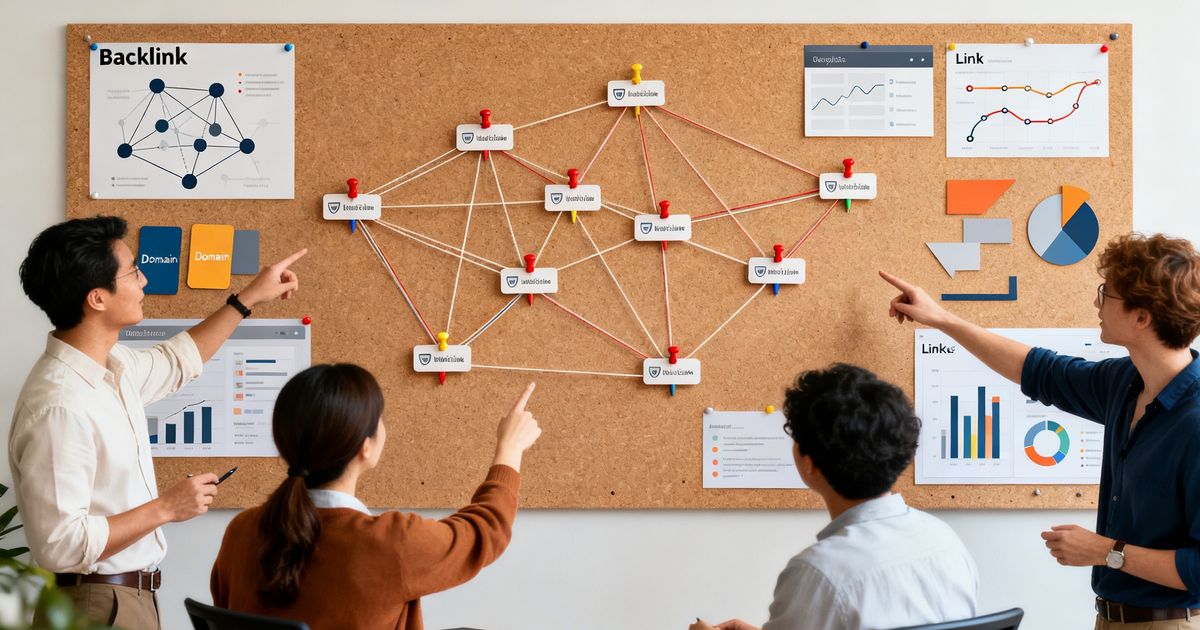
Link building is the process of acquiring hyperlinks from other websites to your own. Those links, called backlinks, act as pointers that help search engines discover your pages and judge how trusted and relevant they are.
This guide covers what link building is, why it still matters, the main link types, a practical workflow, twelve tactics, and the mistakes that get beginners in trouble.
TL;DR:
-
Link building means earning links from other sites to yours. Relevance and quality matter far more than volume.
-
Links support ranking opportunities, but they don't guarantee traffic. Useful content and solid internal linking do much of the groundwork.
-
Start with one tactic, one strong asset, and a focused outreach test. Avoid paid links and link schemes.
What is Link Building? a Concise, Answer-First Definition
Moz's beginner's guide to link building describes it as acquiring hyperlinks from other websites to your own. A university-hosted link building guide frames it as earning or arranging those links.
Short Technical Definition
A backlink is a link on another website that points to a page on yours. A referring domain is the unique website that link comes from. Ten links from one site count as ten backlinks but only one referring domain.
An internal link is different: it connects two pages on the same site. You control internal links completely. Backlinks depend on someone else's decision.
How Links Differ From Other SEO Signals
Links are one signal among many, alongside content relevance, page experience, and more. Google's original PageRank idea treated links as votes of confidence, and while ranking systems are far more complex now, links remain part of how search engines assess pages.
Links also carry attributes. Google Search Central documents these: rel="nofollow" (no endorsement implied), rel="sponsored" (paid or compensated placements), and rel="ugc" (user-generated content such as comments and forum posts). Google treats these as hints about how to handle the link. A plain link with no attribute is often called "dofollow" in industry shorthand.
Why Link Building Matters for SEO and Topical Authority
Search engines use links to find pages and to gauge which ones other sites consider worth citing. A page with relevant links from respected sites in your field has more going for it than an identical page nobody references.
Search Engines and Link Signals
Think of links like professional references. One reference from a well-known person in your industry says more than twenty from strangers. That's why Semrush frames link building around what makes a link worth pursuing, not just how many you can collect.
Links vs Content Quality vs Internal Linking
Links don't rescue weak content. The chain that works looks like this: better strategy, consistent useful content, stronger topical authority and internal linking, more ranking opportunities, and potentially more traffic over time. Results vary by site, market, and publishing volume.
External links bring authority in. Internal links distribute it and show how your pages relate. If you haven't sorted that side, start with internal linking techniques, since it's the cheapest, lowest-risk link work you can do. Whitepress's beginner guide also calls backlink acquisition a fundamental SEO strategy.
Referral Traffic and Discovery
Links also send visitors directly. Illustratively, a small SaaS blog that publishes an original benchmark might get included in an industry roundup. Some readers click through, some of them subscribe, and the link also signals relevance to search engines. The visits are a bonus on top of the SEO value.
Common Types of Links and How They Differ
Semrush's guide sorts tactics by what makes a link worth pursuing. In practice, links fall into a few families.
Editorial Links (earned naturally)
Another site links to you because your content is useful. These are generally the most valuable and the most reliable, but you can't force them. You earn them with assets worth citing.
Guest Posts and Contributor Links
You write for another site and include a link back. They work when the publication is relevant and the article is genuinely useful. They backfire when they're mass-produced with keyword-stuffed anchors.
Resource Pages, Directories, Local Citations
Resource pages curate helpful links on a topic. Directories and local citations list your business details. These are self-created or lightly vetted, so they're useful for baseline presence but carry less weight than editorial links.
UGC, Sponsored Links, and Rel Attribute Differences
Forum posts and comments usually get ugc or nofollow. Paid placements should be marked sponsored. Google Search Central's documentation on link schemes lists buying or selling links that pass ranking credit as a violation of its spam policies. Marking paid links properly is the safe route.
How Link Building Actually Works: a Practical Workflow
Link building is mostly a human process. Software can speed up research and the content side, but outreach is relationship work.
This video provides a helpful walkthrough of the key concepts:
Research: Find Opportunities and Prioritize
Look at who links to competitors but not to you, and which competitor pages attract links. Our guide on finding link opportunities walks through this. Then rank prospects by topical relevance and by how much effort a pitch will take.
Create or Adapt a Linkable Asset
Good assets include original data studies, in-depth guides, infographics, and free tools. Ask a simple question: would a writer in your niche cite this? If not, improve it before pitching.
That makes the asset easier to publish and connect to the rest of your site.
Outreach and Relationship Steps (human workflow)
-
Build a short list of relevant contacts.
-
Personalize each pitch and explain why the asset helps their readers.
-
Follow up once or twice, politely.
-
Record every contact in a spreadsheet or CRM.
DIY outreach costs time but little money. Outsourcing saves hours but costs more and gives you less control over quality and brand tone. Vet any provider carefully.
Measure, Track, and Iterate
Track new links with a backlink tool, and watch impressions, clicks, and queries in Google Search Console. Review what earned links and repeat it.
Tactics You Can Use: 12 Proven Link Building Methods
Effort and return below are general tendencies, not promises. Your results depend on niche, site size, and execution.
-
Guest posting: Write for relevant publications. Fits sites with expertise to share; moderate effort. See our guest posting guide.
-
Resource page outreach: Suggest your content to curated lists. Works when you have a truly useful page; low to moderate effort.
-
Broken-link replacement: Tell a site owner a link is dead and offer your page. Read about fixing broken links. Time-consuming but polite and effective.
-
HARO-style requests: Answer journalist queries with expert quotes. See our HARO outreach tips. Good for people with real expertise; response rates vary.
-
Skyscraper and content improvement: Publish a better version of a page that already attracts links, then tell the linkers. Needs strong content resources.
-
Visual assets and data studies: Infographics and original research attract citations. Our piece on infographic backlinks covers promotion. Higher upfront effort, longer shelf life.
-
Digital PR: Pitch newsworthy stories to journalists. Better with budget and a story angle.
-
Podcasts and collaborations: Guest appearances and partnerships usually include a link in show notes. Low cost, good for relationship building.
-
Outreach-free earned links: Publish consistently useful content and let it be found. Slower, but it compounds.
-
Local citations and directories: List your business on relevant directories. Low effort, modest value, most useful for local businesses.
-
Sponsorships and community involvement: Support events or organizations that link to sponsors. Check that links are labeled properly.
-
Know what to skip: Paid links without
sponsored, link networks, and automated mass submissions risk violating Google's link spam policies. Skip them.
Common Mistakes, Risks, and Safe Best Practices
Over-optimized Anchor Text and Link Velocity
If every link uses the same exact-match keyword, it looks manufactured. Natural profiles mix branded, URL, and descriptive anchors. Read our anchor text best practices for details.
Buying Links and Link Networks (risks)
Google's spam policies on link schemes cover this. Risks include lost rankings and wasted budget. If you've inherited bad links, learn when and how to disavow toxic links. It's rarely needed.
Neglecting Content Quality and Relevance
A link to a thin page earns little and pitches poorly. Fix the asset first.
Not Measuring or Tracking Results
Without tracking, you can't tell which tactic worked. Log outreach and review new links monthly.
A short checklist:
-
Build a quality asset first
-
Target relevant domains
-
Diversify anchor text
-
Document outreach
-
Strengthen internal links
The Bottom Line
Link building is earning relevant links from other sites, and it supports your ranking opportunities without guaranteeing traffic. Pick one tactic, build one genuinely useful asset, and run a focused outreach test before scaling.
Frequently Asked Questions
How long before I see results from link building?
It varies by site, competition, and the quality of what you build. Expect weeks to months for links to land and longer for any ranking effect, and don't treat any timeline as a guarantee.
Are paid links always bad?
Not always, but paid links that pass ranking credit violate Google's link spam policies. Paid placements should use `rel="sponsored"`, and sponsorships and ads are fine when labeled correctly.
What's the difference between a backlink and a referring domain?
A backlink is a single link pointing to your page. A referring domain is the unique site that link comes from, so many backlinks from one site count as one referring domain.
Should I disavow links I don't like?
Usually no. Disavowing is for clear spam patterns or after a manual action, and most sites never need it. Our guide to disavowing toxic backlinks explains when it makes sense.