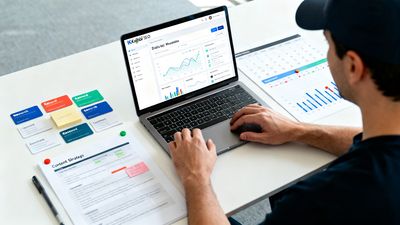
Ghost kitchens—delivery-only restaurant operations—need a search strategy built around menu intent, service areas, and fast ordering flows. This guide shows how to map keywords for delivery queries, design site architecture for menu and location pages, implement menu and LocalBusiness schema, scale content for dozens of virtual brands, and measure organic orders. Read on for tactical steps marketing teams can execute in 30–90 days to increase direct web orders and reduce third-party fees.
TL;DR:
-
Third-party delivery platforms commonly charge 15–30% per order; building organic ordering channels and local landing pages can reduce acquisition cost and start showing measurable lifts in ~90 days.
-
Prioritize menu + local intent keywords (e.g., "vegan burrito delivery near me"); use automation to produce topic clusters and internal links—SEOTakeoff can generate 30+ SEO-optimized articles per month to support those clusters.
-
Implement Menu, LocalBusiness, Offer, and AggregateRating schema and configure Google Business Profile service-area settings to improve discoverability and click-to-order rates.
Why SEO for Ghost Kitchens Matters Now
Delivery and off-premises dining have been a large and growing slice of the restaurant market. Industry research from the National Restaurant Association shows off-premises options make up a substantial portion of sales as consumers increasingly order online and via apps. Delivery marketplaces (DoorDash, Uber Eats, Grubhub) handle a big share of that demand, but their commission fees (often 15–30% per order) compress margins for operators.
Organic search provides two business outcomes that matter for ghost kitchens: lower customer acquisition costs and higher control of order flows. Organic landing pages capture demand from customers searching specific menu items plus modifiers like "near me," "delivery," or "late night." That demand is often high-intent—users are ready to order. Businesses that redirect even a fraction of orders from third-party apps to owned ordering pages can improve margins and gather first-party customer data.
Stakeholders to involve: operations managers (menu accuracy and timing), partnerships (delivery platforms and integrations), and marketing/SEO (site pages, schema, and local listings). Platforms such as SEOTakeoff help by turning one topic idea into a full content engine—keyword research, clusters, internal linking, and direct CMS publishing—so small teams can publish at scale and maintain topical structure without hiring large writer teams.
For regulatory and trust signals, include clear food safety and licensing info on public pages; see the Small Business Administration for planning and licensing guidance when setting up delivery brands. The Small Business Administration's planning and licensing guide explains registration and local requirements that affect credibility and listings.
Keyword Research for Ghost Kitchens: Intent, Menus, and Delivery Queries
Keyword research for ghost kitchens combines classic local intent with menu-level specificity. Start by mapping user intent into three buckets:
Mapping intent: transactional, navigational, informational
-
Transactional: "order buffalo wings delivery [city]" — high priority; the goal is conversion.
-
Navigational: "Joe's Wings menu" or brand queries — useful for branded SEO and loyalty.
-
Informational: "best late night wings near me" or "how long does delivery take [city]" — capture discovery traffic that can be funneled to menu pages.
Prioritize transactional and navigational queries first, because they directly drive orders. Informational content can be used to build topical authority and support service-area pages.
Short-tail vs long-tail menu and delivery queries
Short-tail keywords (e.g., "pizza delivery") are volume-heavy but highly competitive. Long-tail modifiers like cuisine + delivery + city + qualifier (e.g., "gluten-free pizza delivery Midtown Atlanta") match ordering intent and often convert better. Examples:
-
"vegan burrito delivery near me"
-
"late night pizza delivery San Diego"
-
"family pack Korean fried chicken delivery [zip code]"
Use local modifiers (city names, neighborhoods, zip codes) as separate clustering signals; a single menu item can map to many service areas.
Tools and seed lists for menu-focused keyword mining
-
Pull queries from delivery partner search interfaces (typical search terms on DoorDash or Uber Eats).
-
Mine support chat transcripts and order notes for colloquial modifiers like "quick", "large size", "extra sauce".
-
Use keyword tools for volume, difficulty, and local intent metrics. For accelerating research, see what AI SEO tooling can do to expand seed lists and suggest cluster topics.
-
Track metrics: search volume, keyword difficulty, and local intent score (how often the query includes location-modifying words).
SEOTakeoff's automated topic clustering helps group menu queries by intent and map them to pillar pages and cluster pages. That prevents ad-hoc page creation that leads to thin, duplicated content.
Site Architecture & Topic Clusters for Delivery-First Menus
Ghost kitchens need site structures that reflect menus and service areas, while avoiding duplicate pages for the same menu across virtual brands.
Pillar pages: brand, cuisine, and delivery options
Recommended top-level pillars:
-
Homepage / Brand pillar — brand story, ordering options, main CTAs.
-
Cuisine pillars — e.g., "Burgers", "Korean Fried Chicken", "Plant-Based Bowls".
-
Delivery options — a page explaining delivery partners, minimums, and pickup.
These pillars host links to clusters and pass topical authority.
Cluster pages: menu items, location/service-area pages
Cluster pages are where conversions happen:
-
Menu item pages: one URL per core SKU or family (e.g., /menu/vegan-burrito). Include images, price ranges, nutritional info, and ordering buttons linking to native checkout or delivery partners.
-
Service-area landing pages: one for each city/neighborhood served (e.g., /delivery/san-francisco-mission). Use canonical rules if menus are identical across multiple areas.
If the business runs multiple virtual brands under the same kitchen, organize brands as sub-pillars and reuse canonical tags and structured data to avoid duplication.
Internal linking patterns that signal relevance
Anchor text strategy examples:
-
From cuisine pillar to menu item: "Order the vegan burrito" → /menu/vegan-burrito
-
From service-area page to menu item: "Popular burritos in [neighborhood]" → /delivery/[neighborhood]/vegan-burrito
Consistent internal linking signals which pages are primary for ordering intent. SEOTakeoff's internal linking automation generates those links and maintains pillar-cluster relationships as content scales, so topical authority is preserved across hundreds of pages.
For canonicalization, use self-referential canonicals on single-location versions and point duplicates to the canonical service-area page. When seasonal SKUs repeat, mark them with noindex until active, or consolidate seasonal items in a single landing page with clear offers.
For a deeper explanation of programmatic patterns for service-area pages, see programmatic SEO explained.
On-Page SEO Tactics: Menu Pages, Metadata, and Structured Data
Menu pages are conversion pages. They must rank for delivery queries and convert visitors into orders.
Optimizing title tags, meta descriptions, and headers for menu intent
-
Title tag template: [Menu item] delivery | [Brand] in [City] — e.g., "Vegan Burrito delivery | GreenBowl San Diego".
-
Meta description: Include delivery partners or ordering CTA and a unique selling point (e.g., "30-minute delivery, made-to-order vegan burritos").
-
H1: Keep concise and match user intent (e.g., "Order vegan burritos for delivery").
For near-me queries, include neighborhood names naturally in H1s and H2s on service-area pages.
Structured data: Menu, LocalBusiness, and Offer schema
Implement structured data types that match page purpose:
-
LocalBusiness with serviceArea and contactPoint fields for delivery-only operations.
-
Menu or MenuItem schema to list items, price ranges, and dietary attributes.
-
Offer schema for discounts or delivery fees.
-
AggregateRating for review stars where appropriate.
Refer to Google's structured data documentation for exact properties and examples: Google search central — structured data overview.
Place order CTAs near the top of menu pages and near each MenuItem block. For delivery partner badges, link the partner's menu page or include deep links if supported by the partner. Avoid misleading markup—only mark up content that appears on the page for users.
For health and trust signals, include food safety statements and links to authoritative guidance like the FDA's food safety resources: FDA food safety resources and the CDC's food safety pages: CDC food safety and foodborne illness resources. These links increase credibility for customers who scan for hygiene and allergen info.
When menu items repeat across locations or brands, use canonical tags pointing to the primary menu page. Consider templating meta tags so similar SKUs have unique descriptors: append neighborhood or modifier where appropriate.
Local SEO for Service-Area & Delivery-Only Businesses
Service-area businesses face unique rules on Google Business Profile (GBP) and local listings.
Google Business Profile and service-area rules
Google allows service-area businesses but warns against using a false address. Configure GBP as a service-area business and define the cities or zip codes served rather than a storefront. Follow Google's guidance carefully to avoid suspensions; see Google Business Profile help for service-area businesses.
Place service-area details and operating hours on service-area landing pages. If the kitchen has a visible pickup window or storefront for pickup, list the address and hours.
Watch this step-by-step guide on setting up a service-area google business profile:
This tutorial shows step-by-step how to set service areas, verify listings, and avoid common GBP mistakes.
Citations, reviews, and delivery partner listings
-
Claim and maintain consistent NAP (name, address, phone) or service-area descriptors across directories and delivery partner pages.
-
Encourage reviews on your owned site and on delivery partners; add follow-up email or SMS prompts after successful deliveries.
-
Showcase recent positive reviews and address complaints publicly to improve conversion signals.
Moz's local SEO guide has practical citation and reputation tactics worth following: Moz — Local SEO Guide.
Managing multiple delivery areas and virtual brands
If one kitchen runs several virtual brands, treat each brand as a separate GBP only if it meets Google's guidelines for distinct businesses. Otherwise, consolidate reviews and use clear brand pages on the website. For multiple service areas, create targeted landing pages and set GBP to cover the broader area without fabricating addresses.
Keep service-area content fresh with local promos and time-bound offers. Use SEOTakeoff's CMS publishing to keep service-area landing pages live and updated when menus or zones change.
Technical SEO: Performance, Crawlability, and CMS Choices
Delivery pages must load fast, be crawlable, and integrate with ordering systems. Technical health affects visibility and conversions.
Core Web Vitals, mobile UX, and ordering speed
Target these performance benchmarks for ordering funnels:
-
Largest Contentful Paint (LCP): under 2.5 seconds for mobile ordering pages.
-
First Input Delay (FID) / Interaction to Next Paint: under 100 ms.
-
Cumulative Layout Shift (CLS): under 0.1.
Fast, mobile-first ordering increases conversion. Reduce TTFB with server-side rendering or edge caching and minimize client-side JavaScript on menu pages.
Sitemaps, crawl budget, and pagination for menu SKUs
Large catalogs can bloat sitemaps. Best practices:
-
Prioritize canonical ordering pages in the sitemap.
-
Use paginated lists only for discoverability; mark thin seasonal SKUs noindex if they add little value.
-
Use structured sitemaps (separate sitemaps for service areas) and keep them updated.
Monitor crawl activity to spot wasted crawl budget on low-value pages. Only index pages that provide unique value to searchers.
Comparison table: publishing workflows and SEO control
Swipe sideways to compare all columns →
| Workflow | Speed to publish | Automated internal linking | Topic clustering | Audit coverage | Ideal team size |
|---|---|---|---|---|---|
| Manual CMS publishing (handwritten pages) | Slow (days–weeks per page) | No | Limited | Manual | 3–6 |
| Standard CMS + plugins (WordPress + plugins) | Medium (hours–days) | Partial | Partial | Plugin-dependent | 2–4 |
| Automated SEO publishing (SEOTakeoff) | Fast (dozens/month) | Yes (automated) | Yes (automated clustering) | Built-in site audit | 1–2 |
For a deeper look at automating publish workflows and protecting SEO signals during frequent updates, see our article on the SEO publishing workflow.
Choose a workflow based on team bandwidth. For one-off virtual brands, manual pages may work. For dozens of SKUs and multiple service areas, automated publishing with clustering and link automation saves time and keeps topical structure intact.
Content Strategy to Scale: Menu Copies, Local Pages, and Blog Topics
Scaling content for ghost kitchens means prioritizing pages that drive orders and reusing data into discovery pieces.
High-impact content types for ghost kitchens
-
Menu item pages optimized for transactional queries.
-
Service-area landing pages with neighborhood modifiers and ordering links.
-
Blog posts that repurpose order data (e.g., "Top 5 burritos ordered in April") to capture informational searches and social traction.
-
FAQ pages covering delivery times, packaging, allergens, and refund policies.
When deciding what to publish, prioritize high-margin menu items and areas with high search volume.
Repurposing delivery data into content
Order analytics are a goldmine. Examples:
-
Monthly "most-ordered" lists that include CTAs to order.
-
Neighborhood heatmaps showing delivery hot spots—these pages can rank for local discovery terms.
-
Seasonal menu roundups that rank for holiday or event-based searches.
Republishing data-driven content keeps the site fresh and signals ongoing relevance to search engines.
Checklist for scaling content production
-
Prioritize service-area and high-margin menu pages.
-
Standardize title and meta templates for consistency.
-
Use structured data for menu and offers.
-
Automate internal linking to maintain pillar-cluster relationships.
-
Monitor canonicalization for duplicate SKUs.
-
Keep seasonal items noindexed or consolidated when inactive.
-
Use A/B tests on title tags and CTAs to increase click-through and conversion.
Key tactical actions:
-
Use automated publishing to create and update dozens of landing pages without manual editing; see how automated publishing supports rapid scale in our guide to automated publishing.
-
Evaluate when to use programmatic vs manual page generation for menu items and locations to balance quality and speed.
-
Address concerns about AI content with best practices in our article on AI-generated content.
SEOTakeoff can produce 30+ SEO-optimized articles per month and maintain pillar-cluster relationships, enabling small teams to match the content scale of larger operators.
Measuring Success: KPIs, Attribution, and SEO Experiments
Define KPIs that align with business outcomes, not just traffic.
Primary KPIs to track for ghost kitchens
-
Organic sessions to menu and service-area pages.
-
Organic orders (tracked via order button click events or unique promo codes).
-
Conversion rate on order pages (click-to-order or click-to-partner).
-
Visibility for local queries (impressions and average position for "delivery" + city queries).
-
Return-on-content-investment (cost to produce content vs incremental order margin).
Instrument order buttons with event tracking and use unique UTMs for delivery partner links to separate partner-driven from organic-driven conversions. For orders that move off-site (to a delivery app), use promo codes or deep-link parameters to attribute origin.
Testing and validating changes (A/B, content experiments)
Example experiment:
-
Hypothesis: Adding the neighborhood name to the page title increases impressions and clicks for local queries.
-
Test: Rewrite title tags for a cluster of 10 menu pages to include "[Neighborhood] delivery" and measure impressions, clicks, and organic orders over 30 days.
-
Metric: Change in impressions and CTR; secondary metric is organic order lift.
Use lightweight controlled experiments and gradually roll out winning variations. When choosing tools for experiments and automation, consult a vetted list of AI SEO tools and apply strict QA to generated content.
Track cost savings vs third-party commissions; a simple model is to calculate margin gained per order moved from a 20% commission to a direct order channel and multiply by incremental organic orders attributed to SEO.
The Bottom Line: Fast, Local, and Content-First SEO for Ghost Kitchens
Focus on local ordering intent and menu-level pages, organize your site into pillar/cluster structures for menus and service areas, implement Menu and LocalBusiness schema and maintain accurate delivery listings, and scale content with automation to publish and interlink many pages quickly. Start by testing one cuisine or service-area cluster and measure organic orders after 90 days; optimize from there.
Frequently Asked Questions
Can a ghost kitchen use Google Business Profile if it has no storefront?
Yes. Google permits service-area businesses to set up a profile without showing a public storefront address. Configure your GBP as a service-area business and define the delivery zones instead of entering a visible address. Follow Google's rules closely to avoid suspension; see the official guidance at Google Business Profile help for service-area businesses for setup steps and verification requirements.
Should each virtual brand have its own website?
It depends. If brands are genuinely distinct with different menus, audiences, and marketing plans, separate brand pages or microsites may make sense. However, multiple full sites increase maintenance and dilute domain authority. Many operators host multiple brands on one domain with clear brand subpages and service-area landing pages; canonical tags and structured data help avoid duplicate content issues.
How do you handle duplicate menus across locations?
Use canonical tags to point duplicate SKU pages to the primary page, and consolidate seasonal or identical items into a single canonical URL. For location-specific variants (different prices or availability), create distinct service-area pages and include structured data that reflects those differences. Keep a sitemap that prioritizes canonical, transactional pages for indexing.
How long does it take to see results from a content scale effort?
Expect measurable changes in search visibility and clicks within 30–90 days for focused clusters, and meaningful order lift in about 90 days if pages are optimized and linked from a strong pillar. Timelines vary by market competitiveness, crawl frequency, and existing domain authority. Continuous testing and monitoring accelerate improvements.
Can AI-generated content rank for ghost kitchen topics?
AI can accelerate drafting and scaling, but ranking depends on usefulness, accuracy, and uniqueness. Use AI to create first drafts, then apply human review for menu accuracy, local details, and compliance (e.g., allergen info). Our guide on AI-generated content outlines best practices for quality control and SEO-safe automation.