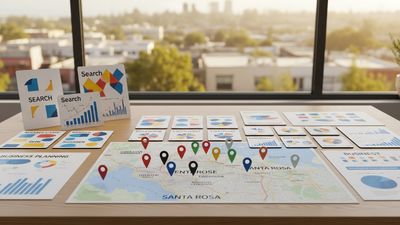
Compare top San Diego SEO agencies, pricing, specialties, and how to choose the right partner for startups and SMBs. Insights, checklist, and alternatives.
March 10, 2026
Updated August 31, 2026
15 min read
Share:
Share:
Finding the right partner among SEO agencies in San Diego can mean the difference between steady lead growth and months of wasted budget. This roundup helps business owners, marketers, and startup leaders compare local specialists, short-list candidates, and prepare the right questions for discovery calls. Read on for profiles, a quick comparison table, selection methodology, and a practical decision guide that covers pilots, proposal evaluation, and red flags.
TL;DR:
Choose a local specialist for foot-traffic and maps visibility: San Diego SEO Company, Affordable SEO San Diego, or Team Soda for neighborhood storefronts.
Pick a full-service agency for multi-channel growth: Eclipse Marketing or Epidemic Marketing for SEO + paid media + content.
Vet proposals with a deliverables-first rubric (content, technical fixes, reporting cadence); run a 30–60 day paid pilot before a long retainer.
Selection emphasized local presence, verified business listings, and clear alignment with common SMB needs — local search, Google Business Profile management, and content that converts. Agencies were chosen because they promote internet marketing services in San Diego, show documented client focus (small business or growth campaigns), and list offices that make in-person or hybrid collaboration practical for local clients.
Selection Criteria Included:
Local office within San Diego County or South County, useful for in-person meetings and local-intent campaigns.
Core specialties matching small-business needs: local SEO, Google Business Profile optimization, technical audits, and content strategy.
Publicly visible reputation signals such as online ratings or consistent branding.
Fit for common buyer types: storefronts, professional services, hospitality, and B2B startups.
Data and verification notes: readers should confirm current office hours and check recent client reviews before booking in-person briefings. For technical standards and search best practices, agencies that reference foundational guidance tend to be stronger: see the Google SEO starter guide and Moz’s beginner guide to search engine optimization for what competent proposals should include. For local profile management, consult Google's guide to managing business profiles.
For context on modern toolsets, see our piece on what actually works for ranking content, which explains how agencies may use automation and AI to scale content and reporting.
1. San Diego SEO Company — Best for Local Businesses
San Diego SEO Company operates from 550 West B Street in downtown San Diego and emphasizes local search tactics for neighborhood businesses. Their public presence and 5.0 rating reflect a focus on Google Business Profile optimization, citation cleanup, and on-page work that drives map-pack visibility. Small retailers, service contractors, and single-location practices will find the team's approach familiar: quick wins on review strategy and local schema, paired with monthly performance reporting.
Strengths:
Local-first playbook: maps, citations, and location page optimization.
Measurable reports aimed at owner-level stakeholders.
Practical implementation for busy small teams.
Potential drawback:
If the priority is enterprise e-commerce or large-scale content programs, businesses may need an agency focused on national search or dedicated e-commerce engineering.
2. Eclipse Marketing — San Diego SEO Agency — Best for Full-service Campaigns
Eclipse Marketing - San Diego SEO Agency is based at 600 B St and positions itself as an integrated internet marketing partner. Their 5.0 rating complements a service set that typically ties SEO into content production and paid media management, which is useful for mid-market companies that want single-vendor coordination. The agency’s strength is packaging search, creative, and paid channels into coordinated campaigns with shared KPIs.
Why They Stand Out:
Integrated strategy across SEO, content, and PPC.
Local office convenient for in-person workshops and cross-channel planning.
Ideal Clients:
Mid-size companies that need a single vendor for growth marketing rather than hiring separate specialists.
Caveat:
Pricing and package breakdowns are not always visible on public pages, so expect a scoping call before receiving a tailored proposal.
3. Saba SEO — Best for Small and Mid-size Businesses
Saba SEO works from Murphy Canyon and builds practical SEO programs for SMB budgets. Their hands-on account management model fits owners who want regular touchpoints and clear task lists rather than high-level strategy decks. The 5.0 rating aligns with a reputation for improving local visibility and executing on-page and GMB improvements efficiently.
Core Services:
Local SEO and citation management.
Content updates and technical monitoring.
Regular, owner-friendly reporting.
Who Should Consider Them:
Local clinics, contractors, and small retail brands seeking predictable month-to-month improvements.
Potential drawback:
Public pricing and packaged offers are limited; most engagement terms are clarified during discovery.
4. Epidemic Marketing — A San Diego SEO Company — Best for Growth-focused Campaigns
Epidemic Marketing - a San Diego SEO Company lists an office near Fifth Avenue and balances SEO with conversion optimization and growth strategy. Rated 5.0, their approach leans toward measurable funnel improvements — not just traffic growth. For teams ready to invest in content and CRO, Epidemic focuses on aligning SEO work to lead generation and revenue goals.
Approach:
Strategy-first engagements that pair keyword opportunities with conversion experiments.
Emphasis on tracking, attribution, and A/B testing where feasible.
Best Use Cases:
Service businesses and tech-enabled companies that need a clear link between organic activity and sales.
Potential fit constraint:
If a company seeks purely creative or brand-centered work without conversion metrics, another provider may be a closer match.
5. Affordable SEO San Diego — Best for Budget-minded Local SEO
Affordable SEO San Diego is positioned near central San Diego and markets straightforward, cost-focused plans for neighborhood businesses. With a 5.0 rating, they deliver practical on-page fixes, local schema, and Google Business Profile work that small teams can implement or have managed affordably.
What to Expect:
Package options aimed at small businesses needing immediate local visibility improvements.
Emphasis on easy wins and clear monthly deliverables.
Potential Limitations:
Smaller teams and lower-cost packages may lack deep enterprise experience or bandwidth for large-scale technical migrations.
6. Digital Creatives — Best for Creative-integrated SEO
Digital Creatives operates on First Avenue and blends creative services, design, and SEO. Their 5.0 rating indicates strength in brand-led content that still respects search fundamentals. Companies that value polished creative assets together with SEO gains — for example boutique hospitality or lifestyle brands — will appreciate this combination.
Creative + SEO:
Design-forward landing pages and content, built with attention to metadata and load performance.
Messaging work that aligns brand voice with search intent.
Good Fit For:
Local brands and experience-driven businesses where design influences conversion as much as rankings.
Note:
National-scale technical SEO or heavy e-commerce engineering may require supplementary partners.
7. Searchific SEO Company — Best for Technical SEO
Searchific SEO Company lists a presence on Cleveland Ave and focuses on technical diagnostics: site audits, crawlability fixes, and speed optimization. Their 5.0 rating supports a profile of agencies that handle engineering-level problems — useful when platforms, migrations, or site architecture block organic progress.
Technical Capabilities:
Deep audits, structured data fixes, and performance tuning.
Recommendations that development teams can action.
Ideal Client Types:
Sites with complex architectures, multi-location listings, or slow performance issues needing engineering work.
Potential drawback:
Clients looking mainly for creative content or brand campaigns may need an additional creative partner.
8. Team Soda SEO Company San Diego — Best for South County and SMBs
Team Soda SEO Company San Diego is based in Chula Vista and serves South County businesses and SMBs across several verticals. Their 5.0 rating and local roots make them a natural choice for regionally focused campaigns where in-community knowledge matters.
Local Footprint:
Strong ties to South County business networks and practical, hands-on SEO work.
Emphasis on simple reporting and owner-level communication.
Service Focus:
Local search optimization, reputation management, and lead capture.
Potential fit:
Best for businesses prioritizing local market share rather than national reach.
9. Storm Brain — Best for Website Design with SEO
Storm Brain combines site design and SEO from their San Diego location, emphasizing builds that consider discoverability from day one. With a 5.0 rating, Storm Brain is useful for organizations that need site launches without sacrificing search fundamentals.
Design + SEO Blend:
UX-driven builds with SEO-friendly templates, metadata, and site speed attention.
Close collaboration between designers and front-end engineers.
Strengths:
Fewer reworks at launch, cleaner site architecture, and better early search performance.
Potential drawback:
The heavy design emphasis may mean ongoing, large-scale SEO programs are less central than the build phase.
10. Jen Ruhman SEO — Best for Boutique, Hands-on SEO
Jen Ruhman SEO presents a boutique, owner-led model well-suited to small-to-medium clients who want direct access to senior talent. The 5.0 rating reflects hands-on attention, clear reporting, and tailored strategies rather than one-size-fits-all packages.
Who They Serve:
Niche service providers, consultants, and small brands that need owner-to-owner collaboration.
Clients who prefer clear, readable reports and a personal working relationship.
What Sets Them Apart:
Owner involvement in strategy and reporting.
Practical roadmaps that fit limited marketing bandwidth.
Common trait:
Boutique firms often do not publish fixed packages, so expect customized quotes during discovery.
11. San Diego Top 10 SEO Agencies 2026 — Best for Quick Research and Comparisons
San Diego Top 10 SEO Agencies 2026 is an aggregator useful for initial vendor discovery. As an external listing rather than a single provider, list-based resources are a fast way to broaden a short-list, though the entries should be verified individually.
What to Expect:
A curated list and quick links to agency websites; helpful for discovery and cross-referencing.
Use as a starting point, then read direct case studies and client reviews on each agency’s site.
How to Use This Resource:
Cross-check any shortlist from the aggregator with direct client references and Google reviews before outreach.
12. San Diego SEO Services — Best for Data-driven Campaigns
San Diego SEO Services focuses on analytics-led marketing and web strategy. Their positioning is consultative: analytics, attribution, and strategic roadmaps that connect search traffic to business outcomes.
Service Focus:
Measurement-first programs, reporting frameworks, and conversion tracking.
Useful when companies already have internal teams to execute technical or content tasks.
Who Should Consider Them:
Mid-market firms that need a strategic partner for measurement and channel optimization rather than hands-on content production.
Potential drawback:
May be more consultative than execution-focused; consider scope carefully if execution is needed end-to-end.
San Diego Market Context: What Buyers Should Know
San Diego’s search environment is shaped by dense local demand (restaurants, tourism, home services) alongside a growing tech and professional services sector. Local search queries and the map pack remain vital for storefronts and hospitality; for those, top KPIs include map-pack rankings, calls/directions from Google Business Profile, and local landing page conversions.
Category-specific Notes:
Home services: prioritize near-me keywords, review velocity, and localized FAQ/content.
Hospitality and retail: strong image optimization, structured data for events, and seasonal campaign planning matter.
Professional services and B2B: content depth, thought leadership, and trust signals (case studies, citations) are primary drivers.
AI and automation are increasingly part of agency workflows for content scaling and reporting. For a primer on these approaches and their tradeoffs, read what AI SEO is and consider tactics from AI SEO for local businesses. Balance is key: automated drafts can speed production, but human editing maintains accuracy and brand voice.
For local profile best practices, consult Google's guide to managing business profiles and match those recommendations to a plan that drives GMB conversions rather than vanity rankings.
Which SEO is Right for You? a Practical Decision Guide
Choosing among SEO agencies in San Diego depends on business goals, resource capacity, and time horizon. Below is a practical checklist and mapping to help pick the right partner. The short answer: match the agency’s strengths to your immediate goal, then validate fit with a small pilot.
Checklist: What to Ask Prospective Agencies
Case studies: Request examples of similar businesses and measurable KPIs (traffic, leads, revenue).
Deliverables: Ask for a month-by-month list (content pieces, audits, technical fixes).
Reporting cadence: Weekly dashboards vs monthly summaries — get clarity.
Team access: Who will manage day-to-day work, and who is the escalation contact?
Contract terms: Minimum length, cancellation, and scope-change policy.
References: Speak with at least two recent clients.
Match by Business Type
Local storefronts: Pick a local-specialist (San Diego SEO Company, Affordable SEO San Diego, Team Soda). Focus on map-pack visibility and GMB conversions.
E-commerce brands: Prioritize technical SEO and platform experience (Searchific or a full-service firm with e-commerce case studies).
National SaaS: Look for agencies with enterprise SEO and content ops experience (Eclipse Marketing or Epidemic Marketing).
Startups: Consider boutique or growth-focused partners that offer flexible pilots and integrated paid/content support.
Red Flags to Watch For
Guarantees of #1 rankings or exact traffic numbers.
No clear deliverables or vague “ongoing optimization” without specifics.
Lack of access to reports or refusal to share recent case studies.
One-person shops promising enterprise-scale results without a team.
What to run as a pilot:
30–60 day paid pilot focusing on a single funnel: site audit + top technical fixes + 4 content pieces or local citations, with clear KPIs for leads or conversions. Pilots limit risk and provide real performance data.
Before signing a long retainer, compare proposals using an outcomes-first rubric, and see how each plan intersects with your internal capacity: for examples of how automation affects deliverables, read about automating small-team publishing and AI SEO tools vs SEO agencies.
For a visual demonstration, check out this video on 9 questions to ask before hiring an SEO:
How to Vet Proposals and Pricing
Comparing proposals means judging services by measurable deliverables rather than by vague promises. Focus on what the agency will produce, when, and how success will be measured.
Comparing Services Versus Deliverables:
Content: Number of pages or blog posts, word count, review rounds, and content ownership.
Technical work: Specific audit items, staging plan, and deployment timeline.
Local work: Number of listings cleaned, review-generation tactics, and citation timeline.
Reporting: Dashboard access, KPIs tracked, and meeting frequency.
Sample Evaluation Framework (score 1–5 Each):
Expertise: Does the team have relevant case studies?
Transparency: Are deliverables and timelines clear?
Fit: Does the approach match business size and vertical?
ROI potential: Are expected outcomes tied to leads or revenue?
When proposals claim programmatic content or automation, ask for details and use our programmatic vs manual content guide to evaluate the tradeoffs. That will help determine whether the approach suits quality and brand-safety requirements.
Engagement models commonly fall into:
Retainer: Ongoing monthly work (best when continuous content and technical maintenance are needed).
Project: Fixed-scope migrations, audits, or site builds.
Hybrid: Initial project followed by a retainer for ongoing expansion.
Score each proposal across the framework, then normalize by expected timeline to compare ROI potential.
The Bottom Line
San Diego businesses should pick an agency that matches their immediate goals: local visibility, full-funnel growth, or technical fixes. Shortlist three firms, request scoped pilots, and choose the partner that commits to measurable KPIs and clear deliverables.
Frequently Asked Questions
How much should I expect to pay for SEO services?
Costs vary widely based on scope: simple local packages for small businesses run lower than full-site technical programs. Rather than fixate on hourly rates, compare what you get for a monthly retainer or fixed project — content volume, technical fixes, and reporting access. Ask for estimated time to value and expected leads per month to judge ROI.
How long before I see organic search results?
The short answer is: it depends. Small, tactical wins (GMB tweaks, citation fixes) can show results in weeks; content-driven and technical improvements often take 3–6 months to impact meaningful organic traffic. For major migrations or enterprise rebuilds, expect 6–12 months. Use interim KPIs like crawl errors fixed, ranking movement for priority keywords, and lead volume to track progress.
Can an agency guarantee a number one ranking?
No reputable agency will guarantee a #1 ranking for specific keywords — search engines are outside any vendor’s full control. Instead, ask for guarantees tied to deliverables and milestones: completed audit, published content, fixed technical issues, and agreed reporting cadence. That makes performance measurable without unrealistic promises.
Should I hire local or national SEO agencies?
If local foot traffic and map-pack visibility are top priorities, a local agency with San Diego experience often moves faster and understands regional intent. For national or enterprise-scale programs, a larger or niche national agency may be a better match. Consider hybrid approaches: a local firm for maps and a specialized partner for large e-commerce needs.
How do I track an agency's performance?
Set up shared dashboards that include KPIs tied to business outcomes: organic sessions, conversions from organic channels, phone calls/directions from business profiles, and keyword visibility for priority terms. Automate routine reports and schedule monthly review calls. For help with automated workflows, see our guide on automating small-team publishing.
Next Steps: Shortlist, Audit, and Pilot
Shortlist three agencies from this roundup that best match your priority (local visibility, full-service growth, or technical fixes). Request a scoping call, a recent case study relevant to your vertical, and a 30–60 day pilot focused on one part of the funnel. During pilot selection, insist on defined deliverables and success metrics so the pilot’s outcome directly informs a longer engagement. Finally, verify current reviews and confirm office locations before scheduling an in-person meeting. For scaling content and repeatable publishing during and after a pilot, review tactics in what actually works for ranking content.