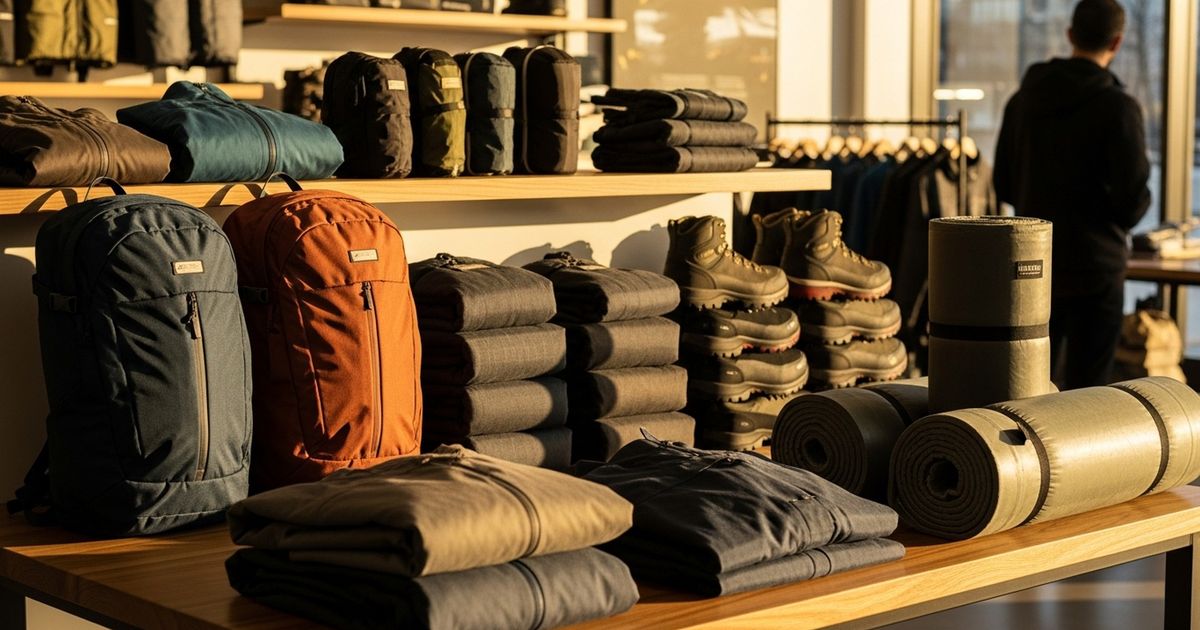
Outdoor gear stores face distinct buying cycles, seasonal demand, and high-consideration product searches. This guide shows how to prioritize buyer-intent keywords, optimize product pages and local listings, and scale content production so stores capture more organic traffic and sales. Read on for a 90-day action plan, technical checklist, and automation tactics that can produce measurable lift without hiring a large content team.
TL;DR:
-
Optimize top 10 best-selling SKUs with product schema and improved titles to capture immediate CTR lift (expect quick ranking gains within 4–8 weeks).
-
Build 3 pillar guides (e.g., Backpack Buying Guide) plus 12 cluster articles timed to seasonal peaks; use automated topic clustering to scale content creation.
-
Use programmatic pages for large SKU sets when search demand justifies it; start pilot projects with tools that support automated article generation and CMS publishing, with plans starting at $69/mo.
Why SEO for Outdoor Gear Stores Needs Its Own Playbook
Outdoor retail is seasonal and product-focused. The U.S. Census e-commerce data shows online retail continues to grow, but shoppers still search locally for in-store pickup and fitting—especially for boots, backpacks, and climbing shoes.
Search behavior for gear shoppers differs from commodity e-commerce. Many queries are high-consideration (reviews, comparisons, fit guides), while others show clear local intent (store hours, pickup, “try on”). Expect a mix of informational queries like "how to choose a backpack" and transactional queries like "men's waterproof hiking boots size 11." Google Shopping and large marketplaces compete heavily on price and reviews; organic listings must win on relevance, expertise, and availability signals.
Plan for long buying cycles. A user researching tents in April may not purchase until May or later. That means content should support research stages (buying guides, comparisons), product pages must convert when ready (specs, availability), and local pages need to show pickup and returns policies. This guide focuses on tactics tailored to those realities.
Keyword Research: How to Find Buyer-Intent Keywords for Gear
Start with a seed list of product families: backpacks, tents, sleeping bags, climbing shoes, Patagonia-style jackets, hydration packs. Expand using modifiers that indicate intent: "best," "review," "vs," "size guide," "where to buy," and seasonal phrases like "best winter hiking boots 2026."
Seed keywords -> expansion workflow:
-
Generate seed list from SKU categories and top-selling models.
-
Use keyword tools (Ahrefs, SEMrush, Google Keyword Planner) to find long-tail variations and search volume.
-
Tag intent: transactional, commercial investigation, or informational.
-
Prioritize by combined score: search volume, CPC (as demand proxy), and conversion potential (AOV and margin).
Example data points for prioritization:
-
"best ultralight backpack" — 2.4K monthly searches, CPC $1.90 — high commercial intent.
-
"backpack size guide" — 700 monthly searches, CPC $0.40 — informational, useful for category funnels.
-
"where to buy climbing shoes near me" — lower volume but very high local intent and conversion.
Map keywords to page types:
-
Product pages: exact model queries, SKU numbers, “buy” intent.
-
Category pages: generic product types and high-level commercial modifiers.
-
Pillar/Blog content: how-to, comparison, packing lists, maintenance tips.
Cluster keywords into logical pillars and subtopics. Teams find automated clustering helpful when scaling from a handful of seed topics to hundreds of related pages. SEOTakeoff’s automated topic clustering helps map one topic idea into a full cluster of pages, assigning intent and suggested page targets. Capture the ratio of purchase-intent to informational keywords per cluster to decide which clusters should prioritize product pages vs content pages.
Also consider programmatic opportunities for large SKU sets. For many retailers, product variants produce similar information pages; programmatic SEO can generate thousands of indexable pages when demand and conversion metrics justify the effort. For a primer on that method, see what programmatic SEO means.
On‑Page SEO & Product Page Optimization for Outdoor Retailers
Good product pages combine accurate specs, trust signals, and buying help. Follow Google’s structured data guidance when implementing schema and meta elements: the Google search central SEO starter guide is the baseline for meta tags and structured data.
Title tags and meta description templates
- Product page title template: Brand Model — Key Spec (Size/Color) | Buy Online & In-Store
-
Example: "ArcTrail Voyager 35L — Men's Hiking Backpack (35L) | Free Pickup"
-
Meta description: 1–2 benefit sentences + a call to action and availability.
- Example: "Waterproof 35L backpack with ventilated back panel. Free pickup in 2 hours — check store availability."
Structured data essentials
- Use Schema.org/Product for every product page, including:
- name, brand, model, sku
- offers (price, priceCurrency, availability, url)
- aggregateRating (if reviews exist)
-
additionalProperty for key specs (weight, capacity, materials)
-
Ensure compatibility with Google Merchant Center if running Shopping ads; include GTIN/MPN where available. Reference the schema spec at Schema.org: Product for fields and examples.
Product Descriptions That Convert (and Scale)
-
Start with a short benefit-led blurb (1–2 sentences) that answers "why buy this."
-
Include a specs table listing weight, volume, materials, warranty, and key features.
-
Add size/fit guidance and care/maintenance tips—these reduce returns and support post-purchase confidence.
-
For scale: generate first drafts programmatically, then apply a light human edit for uniqueness. Use brand voice templates (product tone, trademark terms) and data-driven placeholders (exact specs). SEOTakeoff supports brand voice customization and direct CMS publishing to help scale unique, on-brand descriptions.
Comparison/specs Table: Category vs Product vs Landing Pages
Swipe sideways to compare all columns →
| Element | Category Page | Product Page | Landing / Campaign Page |
|---|---|---|---|
| Target intent | Commercial investigation | Transactional | Promotional / acquisition |
| Recommended schema | CollectionPage / BreadcrumbList | Product, Offer, AggregateRating | Product / WebPage + CallToAction |
| Typical content length | 400–800 words (guides + filters) | 300–800 words (description + specs) | 600–1,200 words (campaign copy) |
| Internal linking | Link to product clusters | Link to related accessories & category | Link to campaign-specific CTAs and forms |
| CTAs | "Shop category" | "Add to cart" / "Check availability" | "Sign up" / "Shop now" |
| Conversion signals | Filters, size guides | Price, stock, shipping, reviews | Promo codes, urgency messaging |
Estimated word counts: product pages often perform best with 300–800 words of unique content plus structured specs; category pages benefit from 400–1,000 words of buying advice and filters. Landing pages vary by campaign goals but should include enough detail to rank for targeted campaign terms.
Examples of scalable content elements:
-
Bulleted specs using structured markup.
-
Short FAQ (using schema FAQPage) addressing fit, returns, and warranty.
-
Size charts as images plus alt-text and table markup.
Follow Schema.org and Google guidelines closely to avoid markup errors and to ensure eligibility for rich results: Product and the Google SEO starter guide at Seo starter guide.
Technical SEO Checklist for Outdoor Gear Stores
E-commerce sites must balance indexable product pages with crawl efficiency. Start by auditing with tools such as Google Search Console and PageSpeed Insights; SEOTakeoff’s site audit feature can surface the most urgent issues.
Priority checklist
-
XML sitemap: Include canonical product and category pages; exclude URL parameters for filters.
-
Robots.txt: Disallow crawling of filtered faceted combinations where URLs provide no unique value.
-
Canonicalization: Set canonical tags for product variants and ensure the canonical points to the canonical product or parent SKU.
-
Pagination: Use rel="next" and rel="prev" patterns where applicable, and provide clear internal links.
-
HTTPS: Ensure site-wide HTTPS with valid certificates.
-
Mobile-first: Test pages in mobile view; address layout shift issues.
Faceted navigation and crawl budget
-
Use parameter handling in Search Console or implement noindex for filter combos that create near-duplicate pages.
-
For high SKU counts, consider programmatic pages only for queries with meaningful search demand.
Page Speed and Image Optimization
-
Target LCP under 2.5s where possible. Use PageSpeed Insights for actionable recommendations.
-
Serve images with responsive srcset and modern formats (WebP/AVIF), and enable lazy-loading for offscreen images.
-
Compress images without losing critical detail for product close-ups; prioritize above-the-fold assets.
Common e-commerce pitfalls
-
Indexing filtered pages that duplicate category content.
-
Missing canonical tags on variant URLs (size/color).
-
Too many thin pages with low or no search demand.
For explanations of crawl budget, canonicalization, and other technical topics, see Moz's guide: Beginners guide to seo. Use Google Search Console to monitor indexing and Coverage reports, and PageSpeed Insights to track Core Web Vitals.
Content Strategy & Topic Clusters for Outdoor Gear Stores (Include YouTube Embed)
A pillar-cluster approach organizes content around core buyer journeys and captures both research and transaction queries. Example pillar: "Backpack Buying Guide." Clusters could include "Ultralight Backpacks," "Backpack Fit Chart," "Hydration-compatibility," and "Top backpacks for thru-hiking."
Pillar and cluster examples
- Pillar: Backpack Buying Guide (1,500–2,500 words)
- Cluster: Best ultralight backpacks (900–1,200 words)
- Cluster: Backpack size chart and fit tips (600–1,000 words)
-
Cluster: How to pack a backpack for a weekend trip (800–1,200 words)
-
Pillar: Tent Buying Guide
- Cluster: 2-person 3-season tents
- Cluster: Tent setup and maintenance
Content types that earn links and convert
-
How-to tutorials and maintenance guides (e.g., "How to seam-seal a rainfly").
-
Gear comparisons and “best of” lists timed to seasonality (spring camping, winter mountaineering).
-
Packing lists and trip itineraries that naturally include affiliate links and product recommendations.
-
Video content and product demos that can be embedded on product pages.
Internal linking and automation
- Use contextual links from pillar pages to cluster articles and to relevant product pages. Automating this process reduces manual work. SEOTakeoff automates interlinking and can publish coordinated clusters directly to your CMS, keeping pillar and cluster pages connected and consistent.
Content calendar sample (seasonal peaks)
-
Spring (Weeks 6–10): Launch "Backpack Buying Guide" + 4 cluster posts timed for spring hikes.
-
Summer (Weeks 14–20): Publish "Best Lightweight Tents 2026" + comparison posts.
-
Holiday (Weeks 40–48): Focus on gift guides and best-of lists.
This video provides a helpful walkthrough of the key concepts:
For a deeper comparison between automated page generation and manual cluster content, consult the programmatic SEO guide.
Local SEO & Omnichannel Tactics for Physical Gear Shops
Physical stores can capture high-intent local traffic. sba.gov/business-guide/manage-your-business/sell-products-online.
Optimizing Google Business Profile (GBP)
-
Ensure correct categories and attributes (e.g., "Sporting goods store," "Accepts returns").
-
Use GBP posts for seasonal promotions and stock updates.
-
Answer customer questions in GBP Q&A and prompt reviews after purchases.
Local pages and inventory signals
-
Create store-level pages with unique content: local staff, store events, and pickup rules. Add LocalBusiness schema (Store) and inventory availability where possible.
-
Implement store-level stock markers for product pages or use Local Inventory Ads where supported to show in-store availability.
Citations and review management
-
Build consistent NAP (name, address, phone) across local directories and key citation sources.
-
Encourage reviews and respond to them—review volume and recency influence local rankings.
KPIs to track at store level
- Local impressions, map pack rankings, phone calls, directions requests, and store pickups. Track conversion from local pages to purchases and in-store visits.
For omnichannel best practices for small retailers, see SBA guidance
Scaling Content Production: Automation, Programmatic SEO, and Quality Controls
Decide when to generate pages programmatically versus investing in bespoke content. Use programmatic generation for high-volume, lower-consideration pages with predictable templates and clear data sources (e.g., SKU specs, size charts). Reserve manual longform articles for pillars, high-value comparison pieces, and experiential content that earns links.
Decision criteria
-
Search demand threshold: pages with consistent monthly searches justify programmatic creation.
-
Business impact: prioritize SKUs with higher AOV or margin.
-
Conversion likelihood: product pages with clear purchase intent should be higher priority.
Recommended workflow
-
Topic selection and keyword validation.
-
Automated draft generation for templates and drafts.
-
Human edit for voice, accuracy, and unique angles.
-
Publish to CMS and enable internal linking.
SEOTakeoff supports this pipeline with automated article generation, topic clustering, internal linking, and direct CMS publishing. For teams automating output, see our write-up on automated publishing and the SEO publishing workflow. For the underlying AI methods, read the AI SEO overview. Teams comparing tools can consult the tool comparison to match needs to capabilities.
Editorial Guardrails
-
Create templates for title tags, H1s, and meta descriptions.
-
Define brand voice guidelines and a short style sheet for product descriptions.
-
Implement a review workflow: editor checklist for accuracy, facts, and SEO elements.
Measuring Content ROI and Experiments
-
Track organic sessions, keywords ranking, and purchases attributed to new pages.
-
Measure time to rank and average position for target keywords; set a baseline and compare after 30/60/90 days.
-
Run A/B tests on product page elements like title variants, featured images, or CTA copy to measure conversion uplift.
Start with a pilot: generate 30–50 pages programmatically for a single category, edit the top 20% by traffic potential, then evaluate performance. SEOTakeoff’s starting price of $69/mo helps teams pilot content automation without a large upfront investment.
Key SEO Priorities & Quick Wins (Checklist)
-
Optimize Top 10 best-selling product titles with the new template and add Product schema.
-
Add unique 300–500 word descriptions to best-selling SKUs and include size/fit guidance.
-
Fix top 5 Core Web Vitals issues identified in PageSpeed Insights.
-
Create 3 pillar pages (Backpacks, Tents, Footwear) and publish 12 cluster articles timed to seasonality.
-
Set up Google Business Profile for each store with correct categories and attributes.
-
Implement LocalBusiness schema on store pages and enable inventory availability where possible.
-
Canonicalize variant URLs and prevent indexing of filtered faceted pages.
-
Run monthly automated site audits and assign fixes by priority using a ticketing system.
-
Add FAQ schema to top category pages to capture rich results for common buyer questions.
-
Test one programmatic pilot for a large SKU subset and measure organic sessions and conversion.
Complete these in priority order: product schema and top-SKU titles first, then Core Web Vitals, then content pillars and local listings.
The Bottom Line
Outdoor gear stores win organic share by combining precise buyer-intent keyword work, product pages that answer fit and availability questions, and a seasonal content plan. Start with product page fixes and local presence, then scale content with programmatic generation where demand justifies it. Teams can pilot content automation affordably, with plans starting at $69/mo, to produce consistent, interlinked content that drives traffic and sales.
Frequently Asked Questions
Can AI-generated content rank?
Yes—AI-generated drafts can rank if they meet quality standards: unique value, factual accuracy, and helpfulness. Industry analysis and Google guidance emphasize usefulness, so AI drafts should be edited for brand voice and accuracy before publishing.
For more details on how to evaluate AI content for ranking, see our post about AI-generated content ranking.
How many product pages need unique content?
Prioritize unique content for the top 10–20% of SKUs that drive most revenue and for any product pages targeted by commercial keywords. Lower-tier SKUs can use templated, optimized specs plus a short unique paragraph.
Should I focus local or national SEO?
It depends on your business model. If you have physical stores or offer pickup, prioritize local SEO and store pages. If you primarily ship nationally, invest in category and product pages and broader content clusters to capture national demand.
How do I measure SEO ROI for a gear store?
Track organic sessions, new keyword rankings, revenue attributed to organic channels, and store-level conversions for local pages. Compare cost-per-acquisition of organic traffic to paid channels and set a time horizon of 3–6 months for content experiments.
What schema is essential for product pages?
At minimum implement Schema.org/Product with Offer (price, availability, url) and AggregateRating when reviews exist. Add additionalProperty for specs and consider FAQ or Review schema for richer SERP features. Follow the Schema.org spec at Product for field-level guidance.