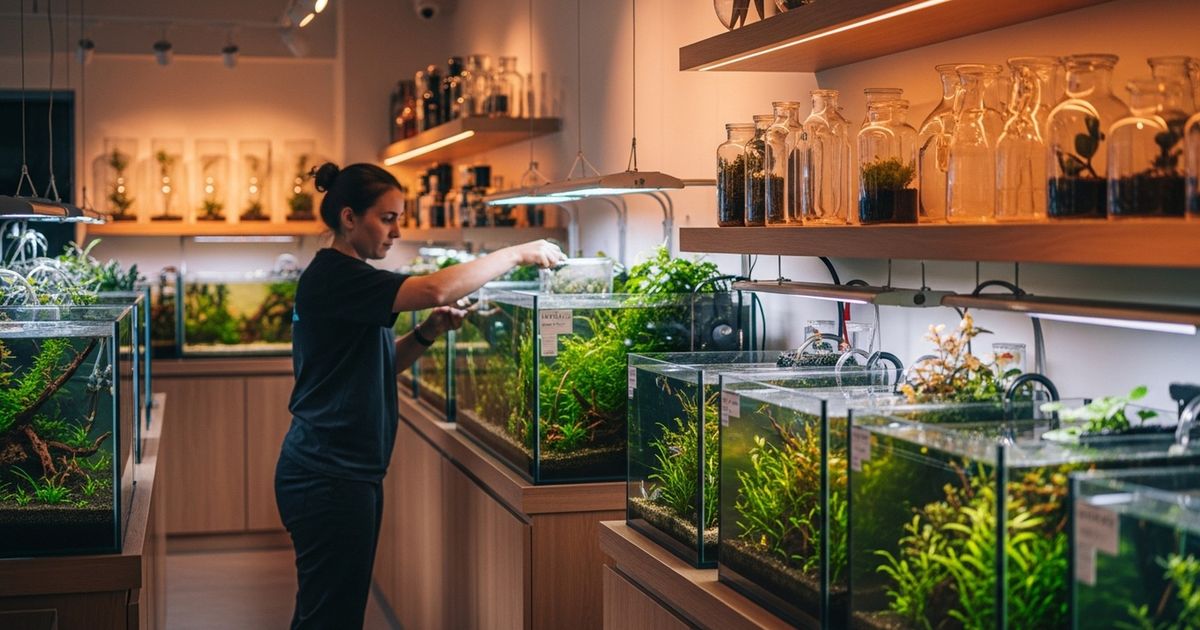
Local aquarium shops and online aquarium supply stores can win steady foot traffic and higher ecommerce revenue through search. Research shows local search drives roughly 30–50% of in-store visits for specialty retailers, while long-tail ecommerce queries account for a large share of online orders. This guide explains which metrics to track, how to build keyword-driven pillar clusters, local business signals that send customers to the door, product SEO that converts, and how to scale content without bloating the site.
TL;DR:
-
Local search can drive 30–50% of in-store visits; focus first on Google Business Profile, reviews, and local landing pages.
-
Build pillar pages for core product lines (aquarium kits, filters, live plants) and 6–8 cluster articles to capture informational and transactional intent.
-
Use automation for drafts and internal linking, pair AI with human review for species care accuracy; SEOTakeoff automates clusters, linking, and CMS publishing (plans start at $69/mo).
How SEO drives sales for aquarium shops
Search is the customer funnel for both walk-ins and online buyers. Walk-in customers often start with queries like "fish store near me" or "aquarium shop open now" and convert quickly after seeing a strong Google Business Profile (GBP) listing. Online buyers often land on product pages from long-tail phrases such as "best freshwater aquarium starter kit for beginners" or informational queries like "how to cycle a 20 gallon tank" that can be converted with product recommendations and internal links.
Metrics to track
-
Organic sessions: Monitor month-over-month traffic to product and guide pages.
-
Local pack impressions: Watch GBP views and searches that triggered the Local Pack.
-
Phone calls and direction requests: These are high-intent local signals.
-
Ecommerce conversion rate and average order value (AOV): Track separately for organic vs paid channels.
-
Assisted conversions: Content that drives later purchase credit (blogs and guides).
Six-point at-a-glance checklist
-
Google Business Profile: Complete listing, accurate hours, photos.
-
Product schema: Add Product and AggregateRating for ecommerce pages.
-
Unique product descriptions: No vendor copy; add care and compatibility details.
-
Localized landing pages: One unique page per service area or store location.
-
Reviews: Request reviews from buyers and reply promptly.
-
Internal linking: Connect informational guides to product pages and category pages.
Tools and entities to use: Google Business Profile, Google Search Console, Google Analytics/GA4, and the U.S. Small Business Administration for growth planning and online selling guidance (see the SBA’s ecommerce and business resources).
Keyword research and topic clusters for aquarium shops
Start from a handful of seed themes: "aquarium kits", "fish tank filters", "live aquarium plants", "aquarium maintenance service". For each seed, split queries by intent.
Intent examples
-
Transactional (buy/compare): "best aquarium filter 2026", "20 gallon aquarium kit sale"
-
Informational (how-to/education): "how to cycle a fish tank", "best plants for low-light aquarium"
-
Navigational/local: "aquarium shop near me", "local fish store with live plants"
Prioritize by search volume brackets
-
High: 10k+ monthly — high competition, focus on category/category landing pages.
-
Mid: 1k–10k — good ROI for product and review pages.
-
Low: 10–1k — long-tail informational queries; low competition and valuable for conversions.
Sample cluster map (example)
- Pillar: "Beginner freshwater aquarium setup"
- Cluster 1: "Best freshwater aquarium starter kit"
- Cluster 2: "How to cycle a 20 gallon tank"
- Cluster 3: "Top plants for beginner aquariums"
- Cluster 4: "Beginner fish species for 20 gallon tank"
- Cluster 5: "Aquarium substrate guide"
- Cluster 6: "Common freshwater algae problems and fixes"
Programmatic approaches Programmatic pages can cover many product+location combos but require strict quality controls. For background on scaling programmatic pages, see the programmatic SEO explained. SEOTakeoff automates topic clustering and produces pillar-cluster output that maps directly to this workflow, so teams can move from seed keywords to a calendar quickly.
Practical tip: use buyer-intent clusters to funnel readers from guides into product pages with clear CTAs, and reserve high-volume transactional pages for site-level category pages.
Local SEO: getting customers through the door
Local signals are the shortest path to foot traffic. Businesses that appear in the Local Pack see a measurable bump in calls and direction requests; BrightLocal publishes analyses that are helpful for benchmarking local performance (see BrightLocal’s local search studies).
Google Business Profile Optimization
-
Choose accurate categories: Use "Pet store" and "Aquarium store" as appropriate.
-
Use Service Lists: Add services like "tank setup", "water testing", "fish delivery".
-
Upload photos: Show store interior, staff, stocked tanks, and product shelves.
-
Maintain Q&A: Pre-fill common questions and monitor user questions daily.
-
GBP post cadence: Publish weekly product highlights, promotions, or events.
-
Review request template: Short SMS or email script that asks for a review, links to GBP, and thanks the customer.
Local citations and consistency
-
Run a citation audit: Verify NAP (name, address, phone) consistency across Yelp, Facebook, Yellow Pages, and industry directories.
-
Structured data: Add LocalBusiness schema on location pages to reinforce address and hours.
-
Service-area pages: If serving multiple towns, create unique landing pages with localized content and store-specific photos. Avoid bulk-creating low-value pages — ensure each page has unique text and offers.
Review management best practice
-
Aim for an average rating above 4.5 in competitive markets.
-
Respond to negative reviews within 48 hours with facts and a path to resolution.
-
Use reviews on product pages and in schema markup to boost click-throughs.
Before automating local signals broadly, read about trade-offs in automated local work in this SEO on autopilot post.
For a visual demonstration, check out this video on digital marketing for aquarium/ pet shop, SEO smm:
Optimizing product and category pages for aquarium shops
Product pages are where SEO converts to revenue. They must answer buyer questions, remove friction, and encourage purchase.
Product Descriptions, Images, and Reviews
-
Write unique product descriptions that include usage tips and care instructions. For example, a filter description should explain flow rate, suitability for tank size, and maintenance cadence.
-
Add images with descriptive alt text and compressed formats (WebP where supported). Include one lifestyle image showing the product in a tank.
-
Display reviews visibly and use AggregateRating schema to populate rich results when eligible.
Schema, prices, and canonicalization
-
Implement Product and AggregateRating schemas per the Schema.org Product and LocalBusiness guidance to improve how Google understands products.
-
Show price and availability clearly. Use structured data for priceCurrency and availability.
-
For variants (color, size), choose a URL strategy: either one canonical product page with variant options or separate pages with clear canonical tags. Avoid duplicate content.
Faceted navigation and crawl control
-
Faceted filters (by size, price, brand) can cause crawl waste. Use robots.txt, noindex on low-value filter pages, or canonical rules to consolidate indexing.
-
Monitor crawl stats in Search Console and limit low-value parameter crawling.
Conversion optimization checklist (A/B test ideas)
-
CTA wording: "Add to cart" vs "Buy now" vs "Check compatibility".
-
Review placement: Test review snippets above the fold vs below product details.
-
Shipping messaging: Test free shipping thresholds, delivery dates, and return policy visibility.
AI and product content AI can accelerate drafting product copy, but content should be verified for species care and compliance. See guidance on when AI can rank in this AI content ranking article. SEOTakeoff can automate article generation for product-related long-form content and create internal linking from guides to product pages.
Technical SEO and site structure for aquarium shops
Good structure helps search engines find valuable pages and avoids indexing low-value URLs.
Technical checklist
-
Robots.txt and XML sitemap: Ensure product and category pages are included appropriately and filter pages are excluded.
-
URL structure: Use logical paths such as /category/product-name or /products/product-name for ecommerce.
-
Indexing: Monitor coverage reports in Google Search Console and fix errors promptly.
-
Structured data: Product, AggregateRating, and LocalBusiness schema where relevant.
-
Core Web Vitals targets: aim for LCP < 2.5s, CLS < 0.1, and FID or INP improvements for interactivity.
Comparison/specs table: ecommerce platforms (high-level)
Swipe sideways to compare all columns →
| Platform | SEO control | Structured data support | Plugin/apps ecosystem | Content scaling friendliness |
|---|---|---|---|---|
| WordPress + WooCommerce | High — full access to templates and URLs | Strong via plugins and themes | Large plugin ecosystem for SEO and schema | High — flexible content and custom templates |
| Shopify | Moderate — hosted with some URL limits | Built-in support and apps for schema | App ecosystem simplifies features | Moderate — easy to publish but limited template control |
| Headless / Custom | Very high — full control but higher dev cost | Full control, requires dev resources | Depends on stack; integration work required | Very high — best for complex scaling if you have dev resources |
Platform decision factors
-
Choose WordPress + WooCommerce for editorial control and content-first strategies.
-
Choose Shopify for a simple hosted setup with fast launch times.
-
Choose headless if planning a large, high-performance site and have development resources.
Run technical audits with Lighthouse, PageSpeed Insights, and Search Console. For realistic tooling expectations and recommended tools, see the AI SEO tools guide and Google's developer docs for structured data and Core Web Vitals at Google search central.
Content strategy: guides, care sheets, and blog topics that rank
High-quality, authoritative content builds E-A-T for species care and drives long-term organic traffic. Use academic and government sources for species and conservation guidance. For example, NOAA provides fisheries and marine species guidance for marine topics (see NOAA Fisheries resources), and university extension content such as the University of Florida gives reliable husbandry information for freshwater species (see university extension resources).
High-impact Content Types
-
Freshwater setup guides and checklists
-
Saltwater vs freshwater comparison pieces
-
Species profiles with care, tank size, and compatibilities
-
Livestock care sheets (feeding, water parameters, quarantine)
-
Equipment reviews and "how to choose" guides
-
Troubleshooting articles (algae control, cloudy water)
-
DIY aquascaping tutorials with product links
-
Seasonal promo pages for holiday kits or events
-
Local event pages (club meetings, in-store workshops)
-
How-to videos embedded on landing pages
Ten topic ideas (specific)
-
"How to cycle a new aquarium in 7 days"
-
"Best aquarium starter kit for a 20 gallon tank"
-
"Low-maintenance fish for beginner aquariums"
-
"Live aquarium plants for low light"
-
"Choosing the right aquarium filter for a 50L tank"
-
"Saltwater setup checklist for first-time reefers"
-
"Treating common freshwater fish diseases"
-
"DIY aquascape for planted tanks"
-
"How to reduce nitrate in aquariums"
-
"In-store aquarium workshops: what to teach and promote"
Internal linking pattern
-
Pillar article (e.g., "Beginner freshwater aquarium setup") links to 6–8 cluster articles.
-
Each cluster article links to relevant product pages (kits, filters, substrates).
-
Product pages link back to buying guides and maintenance guides for cross-assist.
Use automated publishing tools to keep structure consistent—SEOTakeoff supports automated topic clusters, internal linking, and direct CMS publishing to speed deployment. Small teams can publish more content without losing the linking pattern; see this walkthrough on automated publishing.
KPIs to monitor for content
-
Organic clicks and impressions
-
Rankings for target keywords
-
Time on page and bounce rate for guides
-
Assisted conversions and multi-channel funnels
Scaling content: automation, AI, and workflow for aquarium shops
Automation accelerates output but must preserve accuracy for species care and legal compliance when selling live animals.
When to Use AI and Programmatic Content
-
Use AI for first drafts, meta tag generation, and topic clustering.
-
Use programmatic pages for predictable, data-driven pages like product + city listings when each page can be unique and useful.
-
Avoid pure programmatic pages for species care or medical claims—those need expert review.
Seven-step quality control checklist
-
Factual verification: Check water parameter numbers, dosing rates, and species compatibilities.
-
Supplier accuracy: Confirm product specs, stock status, and manufacturer details.
-
Unique value add: Add store-specific tips, photos, or local offers.
-
Images testing: Validate image sizes, alt text, and licensing.
-
Schema validation: Use the Rich Results Test and Schema validators.
-
Internal linking check: Ensure cluster links point to product pages and pillar articles.
-
Legal and regulatory check: Verify live animal sale rules and shipping restrictions.
Editorial workflow example
-
Research and cluster generation (automated)
-
AI draft generation (first pass)
-
Human subject-matter review (care sheets and legal)
-
SEO edit and on-page optimization (meta, headings, schema)
-
QA and publish via CMS (automated publishing)
-
Post-publish audit and link-building
Time and cost example
-
Manual creation: 30 long articles at $250/article ≈ $7,500/month plus linking and QA.
-
Automated approach: SEOTakeoff can generate 30+ SEO-optimized articles per month and publish them, with pricing starting at $69/mo. Teams keep humans in the loop for verification, reducing per-article cost and time.
For workflow templates and pipeline suggestions see the seo publishing workflow and read more on how AI supports research and outlines in what is AI SEO.
The Bottom Line
Start with local fixes: fix GBP, clean citations, and solicit reviews. Audit product pages for unique descriptions and schema. Publish one pillar page plus six cluster articles to capture both buyers and researchers. Automate drafts and publishing, but keep a strict QA loop for species care and legal content. SEOTakeoff automates cluster creation, internal linking, and CMS publishing — pricing starts at $69/mo.
Frequently Asked Questions
What keywords should an aquarium shop start with?
Begin with a mix of local intent and core product terms: "aquarium shop near me", "freshwater aquarium starter kit", and "fish tank filters". Expand into informational long tails like "how to cycle a 20 gallon tank" to capture buyers earlier in the funnel. Prioritize mid-volume terms (1k–10k) for product pages and low-volume long tails for guides.
How can SEO increase local foot traffic quickly?
Optimize Google Business Profile (accurate categories, hours, photos), maintain consistent NAP across citations, and request reviews from recent customers. Add localized landing pages for nearby towns and promote in-store events to appear in searches and GBP posts. BrightLocal’s research helps benchmark typical local performance.
Can AI write product descriptions for aquarium items?
AI can generate drafts and meta tags quickly, but all care-related content must be reviewed by a human subject-matter expert, especially for live plants and animals. Follow schema and review guidance to ensure descriptions are accurate and useful. See the SEOTakeoff guidance on AI content ranking for best practices.
How should a shop handle content about regulated or protected species?
Use authoritative sources like NOAA and university extension pages for species guidance, avoid medical claims, and include legal disclaimers where required. Verify local collection and shipping rules before publishing any procurement or shipping instructions.
How do you measure ROI from SEO for an aquarium shop?
Track organic ecommerce revenue, in-store traffic attributed to GBP (calls and directions), and assisted conversions from guides to product purchases. Compare cost per article when produced manually versus automated workflows and monitor organic revenue growth month-over-month to calculate payback.